
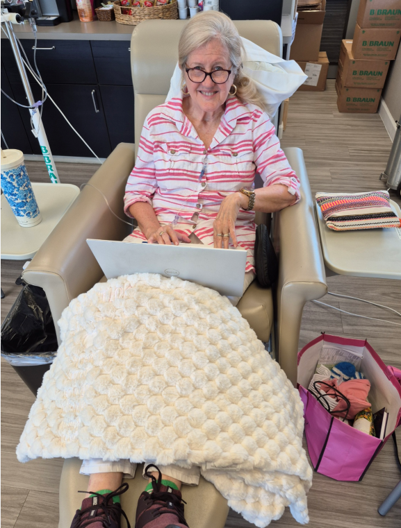
We arrived that Tuesday with multiple bags in tow, looking like we were moving into the oncologist’s treatment room. A big, shiny, pink bag held:
- Fuzzy blanket gifted to me by Team Carol (College Station girlfriends and my frontline prayer warriors)
- Pashmina, in case I needed a shawl to keep warm. Although it was summertime, the treatment room was cold!
- Blank notebook and pen (to take notes on my experience, note tips for future sessions)
- Laptop, charger block, headphones in case I was inclined to get online during the 3-4 hour treatment
- Miscellaneous small bag (containing lip balm, healing oil, xylitol gum, reading glasses, hair tie)
- Metal glass filled with lemon water
And then a small cooler containing:
- Snacks (ham, boiled eggs, peanut butter and spoon)
- Ice gloves and socks and hat (more on that later)
- Frozen pads to keep ice gloves, socks, hat cold
- Refill for my filtered water from home
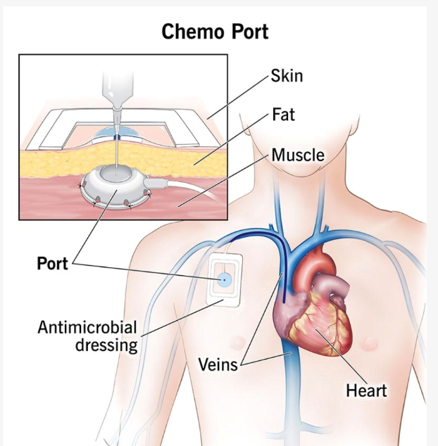
First stop was drawing blood and running labs for the week – using my newly installed port for the first time! The port made this process (repeated weekly) very fast, painless, and easy on my vascular system. After that, we waited for lab results and then to see the medical oncologist prior to first treatment. He had no concerns with my bloodwork and so we were ready to get this party started.
Once I settled into one of the eight comfy recliners, the nurse tech measured my blood pressure and offered a warm blanket. The blanket was a sweet offer, but I opted for my fuzzy, plush blanket with “Team Carol” embroidered on it in pink. Next, NP injected an antihistamine and antacid into my port (to lessened potential side effects), then a steroid (dexamethosone, to also stave off allergic reactions and potential nausea). Next up was connecting the Herceptin immunotherapy for 90 minutes of slow drip, followed by another 90 minutes of Taxol (chemo) slow drip. In total, we were there from 9am to about 2pm. The nurses estimated that future weekly treatments wouldn’t take 5 hours due to no doctor visit and slightly faster drip.
My active imagination kept me on high alert the next 24 hours as I kept waiting for the other “shoe to drop” all day and into the night. But, praise God, no adverse side effects came. My appetite was normal and energy was surprisingly robust. Same the next day. The only noticeable change was that my arthritic ankles (due to a history of 5 surgeries) seemed to hurt LESS. Hmmm. Could it be the steroids they shot into me?
But Jesus beheld them, and said unto them, With men this is impossible; but with God all things are possible. Matthew 19:26



 My Next Steps